If you’re planning a trip along the Carretera Austral and wondering things to do in Caleta Tortel, this article will help you get oriented quickly and decide if it’s worth stopping for a day or two.
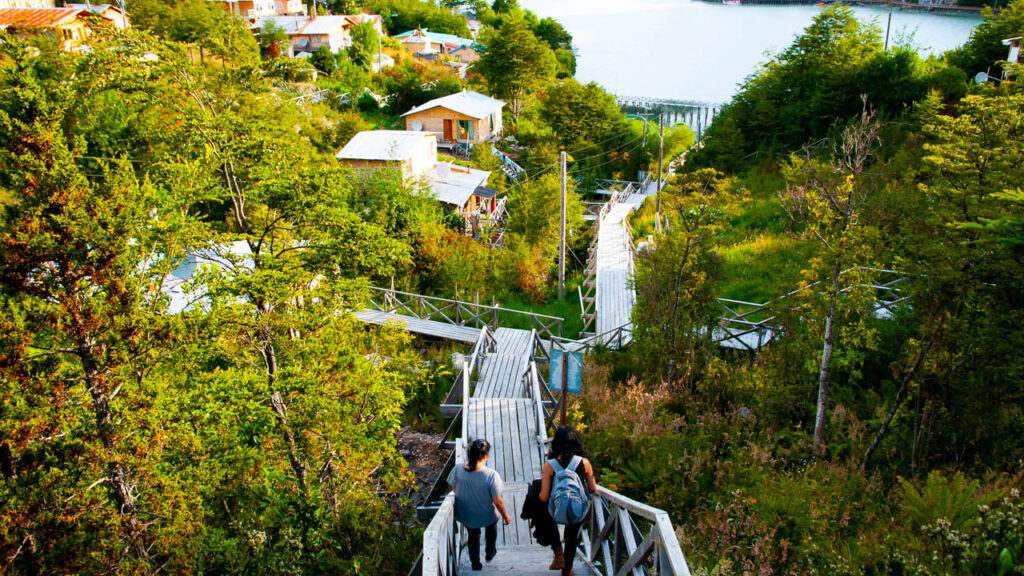
Caleta Tortel is located between Cochrane and Villa O’Higgins, in an area characterized by fjords, rivers, and humid forests. There are no streets or cars in the village: everything moves along wooden walkways that connect houses, docks, and viewpoints.
The village has few shops: a small store, simple cafés, and woodcraft workshops. There aren’t many options or variety, and the hours can be limited.
A good time to observe the village’s activity is mid-morning, when daily activities begin and the majority of visitors who come and go in a single day haven’t arrived yet.
In this guide, you’ll find what to see and do in Caleta Tortel, how many days to stay, what you can explore on foot, what by water, and some practical tips for organizing your visit.
Table of Contents
Map and How Many Days to Spend in Caleta Tortel
Caleta Tortel is small and can be explored on foot, but the access and the way to visit it make it worth considering how many nights to stay. It’s not a destination to just pop in and out in an hour, especially if you’re driving along the Carretera Austral.
One night is enough if you’re coming from Cochrane or heading to Villa O’Higgins and want to see the village without doing excursions. You’ll arrive in the afternoon, take a first stroll along the walkways, sleep, and the next morning explore the main areas before continuing your journey.
Two nights gives you a full day to walk around the village at a leisurely pace and consider a short boat trip if the weather is good and there are departures available.
In terms of distances, the layout usually looks like this:
- Cochrane → Caleta Tortel: a long stretch of gravel road, it’s best to arrive with enough time and stay overnight.
- Caleta Tortel → Villa O’Higgins (or vice versa): another full day of travel, it’s not a good idea to add Tortel “on the way” without staying overnight.
1) Strolling Along the Cypress Walkways
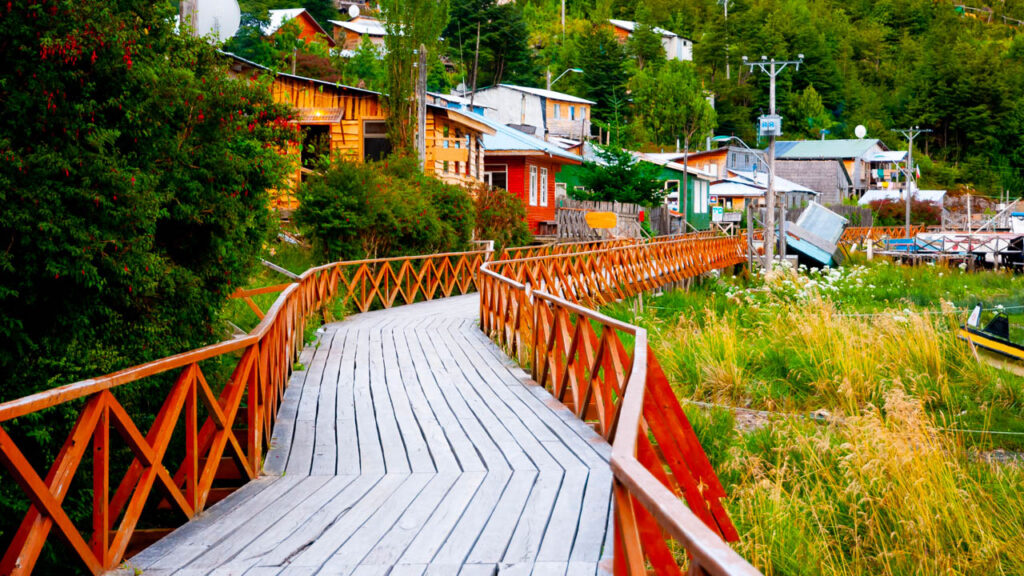
The village is entirely navigated by cypress wood walkways that connect houses, docks, and viewpoints. There are no streets or sidewalks, so everything is done on foot. The terrain is constantly changing: uphill, downhill, and many stairs along the way.
📌 If it rained, walk carefully and wear shoes with good grip. Wet wood is slipperier than it looks.
A big part of Tortel’s charm lies in getting a bit lost among the stairs, small docks, and walkways that don’t lead anywhere specific. Here, you’ll find wooden houses, tied-up boats, and views of the fjords.
At the end of the walkways, to the south of the village, is Playa Ancha, a wide and open coastal area. It’s not suitable for swimming: the water is very cold and there’s quite a bit of wind, so it doesn’t have the conditions for a traditional beach experience, even in summer. Still, the landscapes are amazing and it’s worth making the full trek there.
2) Viewpoints over the fjord and the Baker River
Throughout the village, there are several elevated points where you can see the fjord and the mouth of the Baker River. Some viewpoints are marked, while others are on the walkways themselves.
In the morning, visibility is usually better, and then, late in the afternoon, when the sky clears, the lower light works well for photos, although it greatly depends on the day’s weather.
You don’t need to look for them as “attractions”: they appear as you walk and climb levels within the village.

3) Environmental Interpretation Center, one of the things to do in Caleta Tortel
Along one of the walkways in the village is the Environmental and Tourist Interpretation Center, an outdoor space integrated into the route. It doesn’t function like a traditional museum, but rather as a series of stations with informational panels about the environment of Caleta Tortel: fjords, estuaries, glaciers, flora, fauna, and the history of the settlement.
The route is short and you walk it almost without realizing, as you move along the walkways. That’s why it makes sense to include it as part of the overall stroll through the village, rather than as a standalone visit. Admission is free and there’s no access control, since it’s a public space.
4) Short Boat Trips from Caleta Tortel
From the village, you can take boat trips through the fjord and the area at the mouth of the Baker River. These are short excursions that depend entirely on sea and wind conditions, so they’re not always available.
It’s a good idea to check as soon as you arrive with local agencies or the hotel where you’ll be staying, because many departures are confirmed the same day based on the weather and the number of passengers. It’s not something you can finalize in advance.
During some seasons, longer excursions to nearby glaciers or areas related to the Northern Ice Fields are offered, but they don’t run every day or throughout the year, and they usually require sustained good weather.

5) The Surroundings of Caleta Tortel
Caleta Tortel is usually visited during the last stretch of the Carretera Austral, between Cochrane (to the north) and Villa O’Higgins (to the south). In addition to the short boat trips you can take in Caleta Tortel, here are the points that are part of the journey before and after your visit.
Cochrane and Its Parks (Northern Section)
Cochrane is the previous stop on the route for those coming to Caleta Tortel from the north. Surrounding it are some natural spaces worth visiting, such as:
- Patagonia National Park (Chacabuco Valley sector), featuring trails, wildlife, and open landscapes.
- Cochrane Lake / Tamango National Reserve, known for the presence of huemules.
Many travelers spend one or two nights in Cochrane to explore these parks before heading down to Caleta Tortel.
🔎 Check out the best things to do in Cochrane.
Viewpoints and Scenic Stops on the Route to Tortel
The gravel road that connects the Carretera Austral with Caleta Tortel has several scenic points overlooking the fjord, forest, and streams. They may not be official viewpoints, but you’ll see them along the side of the road, where cars usually stop.
Villa O’Higgins (southern section)
To the south, from Villa O’Higgins, you can find:
- treks and trails,
- boat trips,
- crossings to Argentina.
🔎 Check out the best things to do in Villa O’Higgins.
Practical information for travel to Caleta Tortel
How to Get to Caleta Tortel
You can reach Caleta Tortel from the Carretera Austral via a gravel road that branches off near Cochrane. The detour is marked, and the final stretch is long and slow, with curves and sections where you should drive carefully.
If you’re traveling by car, it’s important to leave with a full tank from Cochrane, as fuel isn’t always available in Tortel. Travel time can vary significantly depending on road conditions and weather.
There’s no frequent public transportation. Buses, when they do run, usually have limited weekly services and schedules that change with the season.
Where to Stay in Caleta Tortel
The accommodation options are very limited and consist mainly of family-run lodgings, simple hostels, and a few cabins on the walkways. There are no large hotels or chains.
During peak season, it’s best to book in advance, especially if you’re only staying for one night. It’s also important to carefully check the cancellation policies, as access to Tortel can be affected by road conditions.
Our recommendations for where to stay in Caleta Tortel are as follows:
- Hospedaje Albita: simple, with sea views and good service from the owner.
- Costanera Tortel Hostel: the most well-known, and therefore, the most sought after by backpackers. It has simple rooms and common areas.
- Entre Hielos Lodge: if you have a mid-to-high budget, this is the ideal place. Well-decorated, it features a restaurant that serves three-course dinners.
Where to Eat and What to Try
In Caleta Tortel, the food is based on local products, featuring fish, seafood, and homemade dishes.
Best Time to Visit Caleta Tortel
The high season runs from December to March, when more services are open and conditions for navigation are better. Still, the weather is variable and rain is common.
In spring and fall, there are fewer people, but also fewer services and limited water departures. In winter, access can become complicated and many accommodations close.
Final Travel Tips
- Bring waterproof clothing and shoes with good grip for walking on wet walkways.
- Add extra days to your itinerary for possible delays on the route.
- Don’t rely solely on cards: it’s advisable to carry cash.
- Phone and internet signal is limited, download maps and data before you arrive.