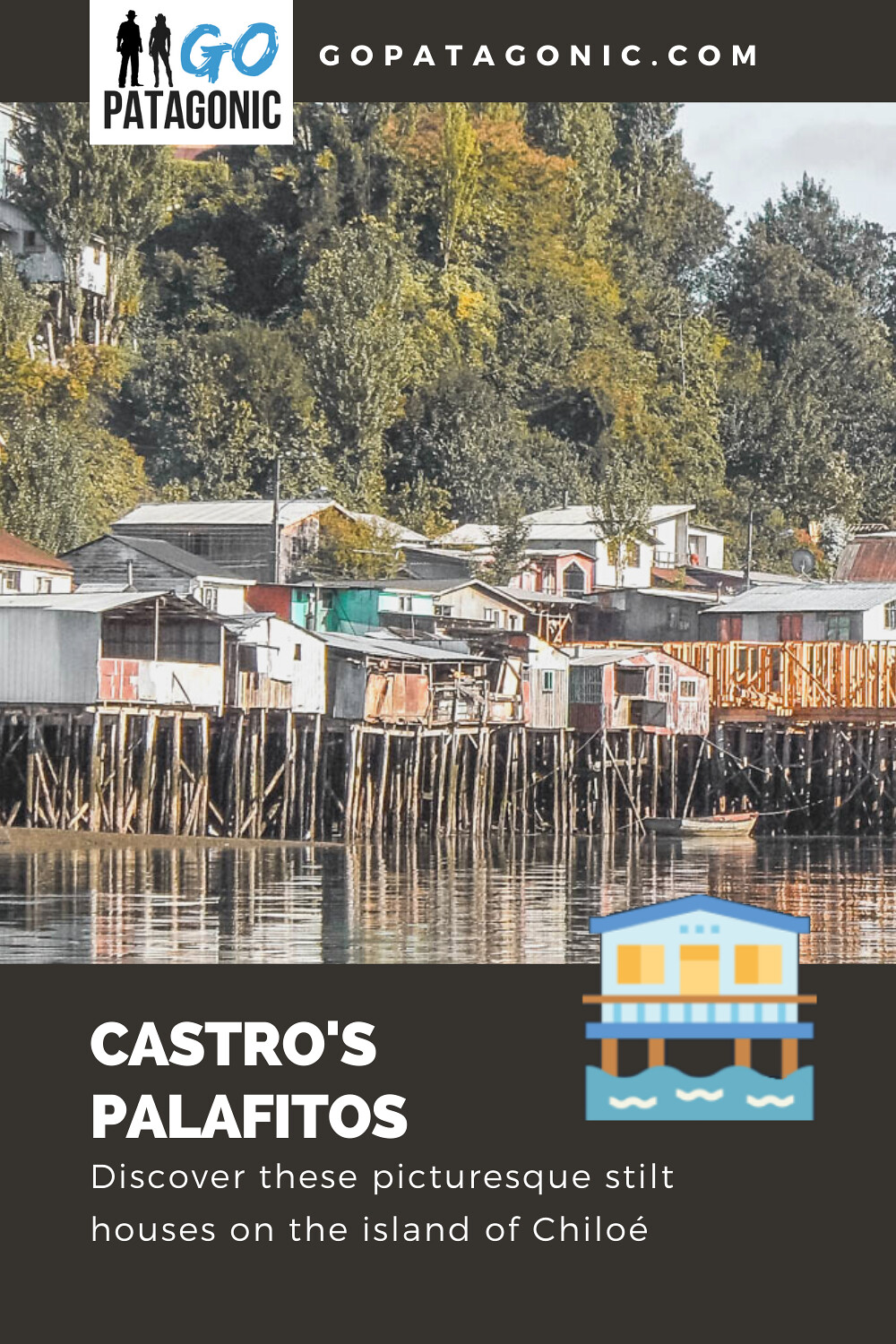
Visiting the palafitos of Castro is one of the great classics of the Big Island of Chiloé, as these constructions are very picturesque and colorful. Find out more in the following article.
The island of Chiloé has its own particular charms, in addition to the natural beauties such as the cliffs on the coast, beaches with dunes or marine fauna such as penguins.
In addition to the routes of the churches, named World Heritage, there is this ancient tradition of settling the houses on pillars on the banks of rivers and lagoons, where the waters are calmer.
Based on our tour, here is all the information you need to know about the Castro stilt houses.
🔎 Check here the quide to travel to Chiloe Island.
Table of Contents
What are the palafitos
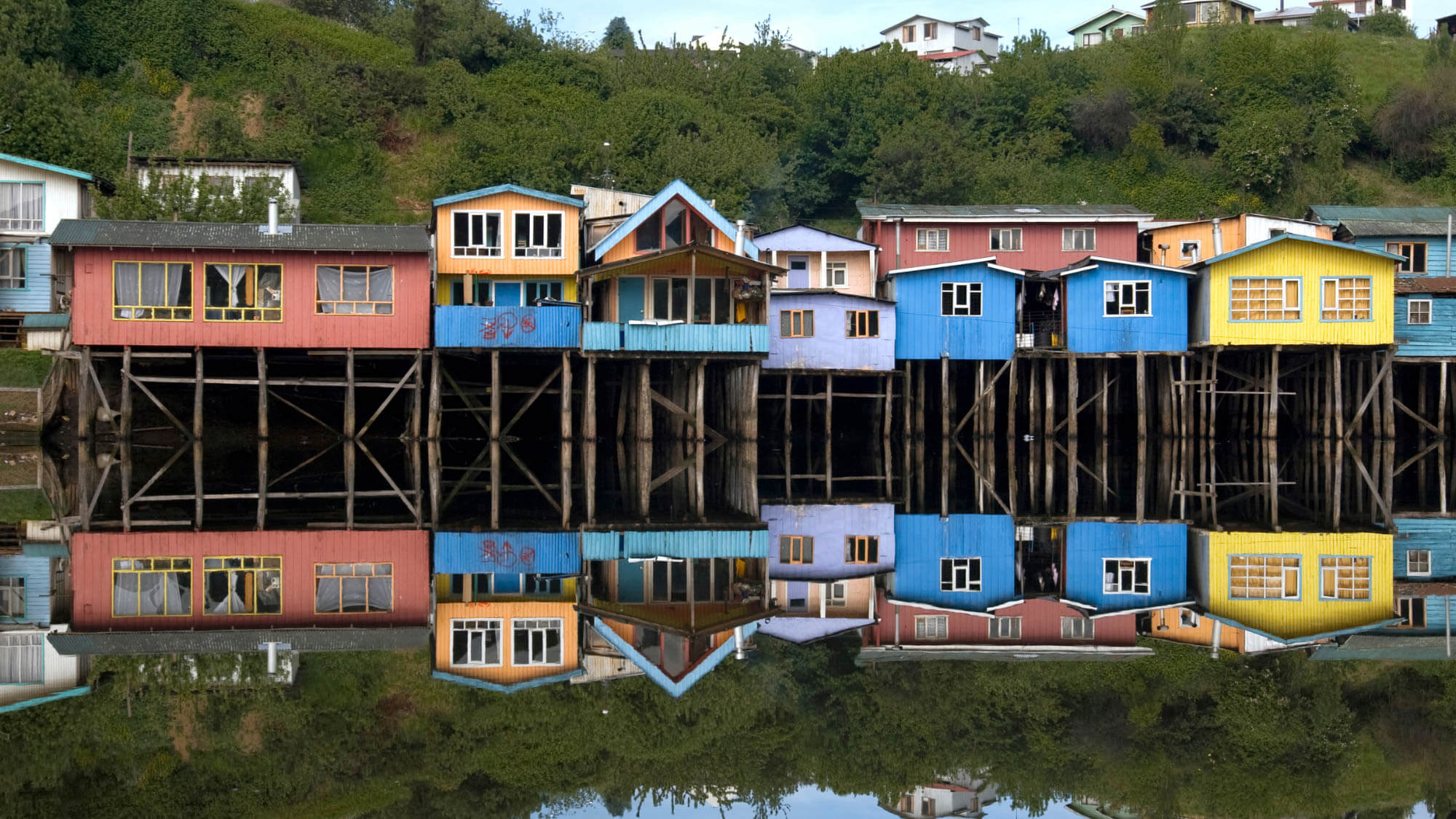
The palafitos are constructions made on stilts in the water, usually in quiet areas such as canals, lakes or lagoons. It was widely used centuries ago to take advantage of the space on the water’s edge.
This is one of the main attractions to see in Chiloé and as you cannot miss the Castro stilt houses, we tell you how to see them below.
🔎 Check here the top 5 things to do in Chiloe Island.

Visiting the palafitos of Castro
Castro is the main city of the big island of Chiloé and is where most of the stilt houses are located.
The construction of the palafittes in Chiloé originated during the 19th century when the whole area underwent a great commercial expansion, especially in the fishing industry, which allowed fishermen to live by the water and moor their boats next to their homes. In addition, since it was public land, the fishermen could settle there practically free of charge (although this currently causes major problems with home ownership).
The houses that were built on the pillars are colorful and are made of local wood such as luma or cypress. Roof shingles are made of larch wood. The house has two well-defined fronts, one towards the canal where there is a beautiful terrace, and the other towards the street connected by a bridge.
In the past, there were a large number of stilt houses scattered around the island of Chiloé, but due to earthquakes and tsunamis many have disappeared. Currently, many of the palafitos are still inhabited by the islanders, who make their daily boat trips to catch seafood and fish, but some were converted for tourism, so there are palafitos that are cafes, restaurants or hotels where you can sleep.
Getting to Castro on Chiloé Island
There are different ways to get to Castro from the rest of Chile. One of them is by plane, flying from Santiago de Chile to the Isla Grande de Chiloé. You can also fly to Puerto Montt and cross by ferry.
✈️ Check here for cheap flights to Chiloe Island (Castro).
You can also rent a car in Puerto Montt and tour the island on your own and at your own pace. That way you will not only visit the palafitos of Castro but also other beauties of the island.
🚗 Check here if you want to rent a car in Puerto Montt.
Another option is to take an excursion from Puerto Varas or Puerto Montt, with a guide who will explain every detail and let you go with peace of mind and without worries.
📷 Check out this excursion to visit Castro and other places of Chiloé Island from Puerto Montt with a local agency and make your reservation.
Where to see the stilt houses of Castro
The area of the Gamboa neighborhood is the ideal place to visit the stilt houses of Castro. Most of the stilt houses are located on the waterfront from the port to the Gamboa River bridge, in a route of about two kilometers long.
It is advisable to visit the Castro stilt houses both at low tide and high tide, since the landscape and photography change a lot.

Location to visit the Castro stilt houses (map)
Pin it!